

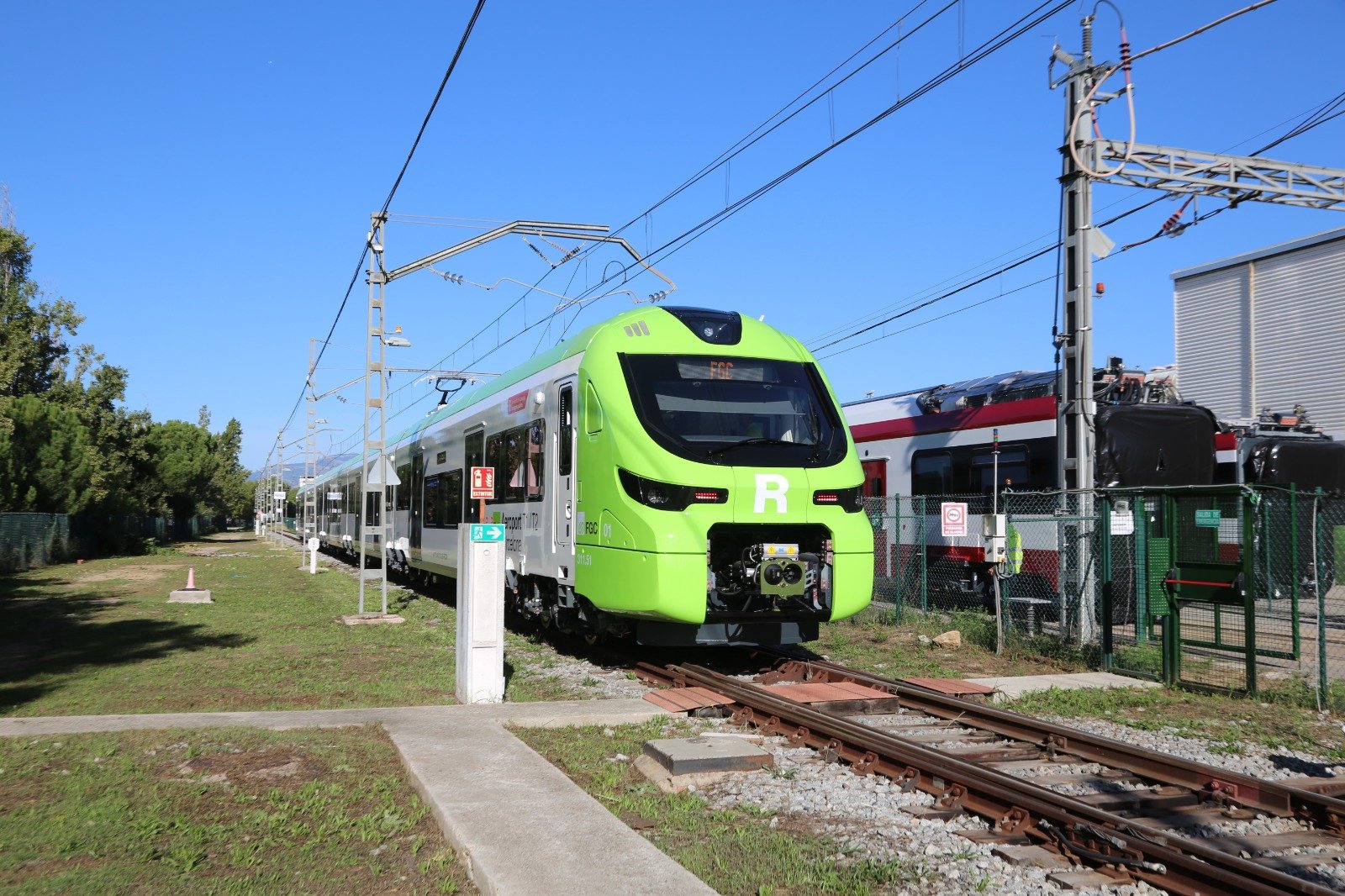
The first of the ten electric trains that will run on the new Ferrocarrils de la Generalitat de Catalunya (FGC) line connecting the center of Barcelona with terminals T1 and T2 of Josep Tarradellas Barcelona-El Prat Airport has been presented. The service is expected to start between late 2026 and early 2027.
The new line will have a length of 22.7 kilometers and nine stations: Sant Andreu, Sagrera, El Clot, Passeig de Gràcia, Sants, Bellvitge, El Prat, Airport T2, and Airport T1. Trains will run every 15 minutes, allowing passengers to travel between the center of Barcelona and T1 in just over 20 minutes.
The new trains, manufactured by Alstom at their Santa Perpètua de Mogoda facility, will consist of five cars and have a capacity of 656 passengers. They will feature real-time flight information, luggage spaces, areas for bicycles and strollers, and adapted restrooms for passengers with reduced mobility. The doors will have light signaling and automatic ramps to facilitate access from the platform.
Currently, static and dynamic tests are being carried out at the Alstom Industrial Center. Validation tests will include traction, braking, signaling, telecommunications, and dynamic behavior.
A new maintenance workshop for trains
Simultaneously, a new maintenance workshop is being built in Santa Perpètua de Mogoda, covering an area of 3,500 m² and featuring two work tracks. The construction, scheduled to be completed by spring 2026, will ensure the maintenance of the trains for the next 15 years and enhance their operational reliability.